
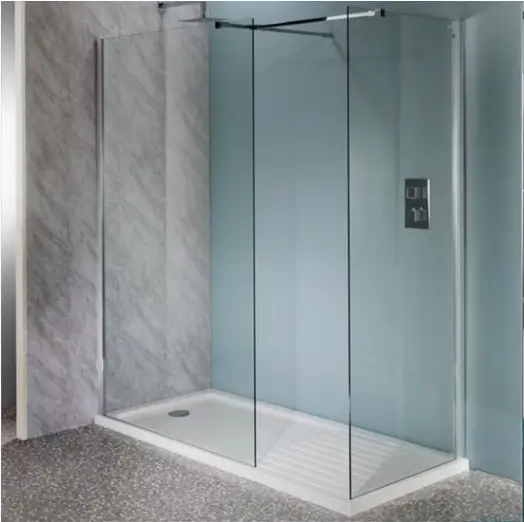
Choosing the right glass thickness is an important part of planning a frameless shower door. Unlike framed shower doors, frameless designs use less metal framing, so the glass and hardware play an important role in the door’s stability, appearance, and everyday operation.
For most residential frameless shower doors, 3/8-inch and 1/2-inch tempered glass are common choices. The best option depends on the size and design of the enclosure, door dimensions, hardware, installation requirements, and the bathroom layout. Lookout Frameless Shower Doors uses high-grade tempered glass and offers custom frameless designs for bathrooms in Chattanooga, TN.
What Glass Thickness Is Common for Frameless Shower Doors?
The two thicknesses most commonly considered for frameless shower doors are 3/8 inch (about 10 mm) and 1/2 inch (about 12 mm).
Both can provide a strong, modern glass enclosure when the design, hardware, and installation are appropriate. The thicker option is not automatically better for every bathroom.
3/8-Inch Glass
3/8-inch tempered glass is a popular choice for many residential frameless shower doors. It offers a balance of strength, appearance, and weight.
It can work well for many standard custom shower configurations when properly designed and installed.
1/2-Inch Glass
1/2-inch tempered glass is thicker and heavier. It can provide a substantial feel and is often considered for larger doors or particular enclosure designs.
Because it weighs more, the supporting hardware and installation must be appropriate for the glass and door configuration.
Why Is Tempered Glass Used for Shower Doors?
Safety is one of the most important considerations when choosing shower glass. Tempered glass is specially treated to increase its strength compared with ordinary annealed glass.
Lookout Frameless Shower Doors specifically states that it uses high-grade tempered glass for its custom shower door installations.
Tempered glass is designed to break into smaller, less dangerous pieces if it does break, making it a standard safety choice for many shower door applications.
Is Thicker Glass Always Better?
Not necessarily.
A thicker glass panel can feel more substantial, but choosing glass thickness should not be based on thickness alone. A professional needs to consider the complete enclosure, including:
- Door size and weight
- Fixed panel dimensions
- Shower layout
- Hardware and hinges
- Wall conditions
- Door configuration
- Installation requirements
For example, a large swinging door places different demands on its hinges and surrounding structure than a smaller panel.
What Factors Determine the Right Glass Thickness?
Door Size
The dimensions of the shower door are one of the factors that influence glass selection. Larger or heavier doors require careful consideration of the glass, hinges, and supporting structure.
Shower Layout
Every bathroom is different. A custom enclosure may include fixed panels, swinging doors, or sliding doors. Lookout Frameless Shower Doors offers custom enclosures along with swinging and sliding door designs.
Hardware
Hinges, handles, brackets, and other hardware must be suitable for the selected glass and enclosure design. The glass thickness and hardware should work together as part of one complete system.
Installation
Even quality glass can perform poorly if the enclosure is not properly measured, supported, and installed. Professional installation helps ensure that the panels and hardware are correctly positioned.
What Is the Difference Between 3/8-Inch and 1/2-Inch Glass?
The main difference is thickness and weight.
| Feature | 3/8-Inch Glass | 1/2-Inch Glass |
|---|---|---|
| Thickness | About 10 mm | About 12 mm |
| Weight | Lighter | Heavier |
| Appearance | Clean and substantial | More substantial |
| Common use | Many residential frameless designs | Larger or specific custom designs |
| Hardware requirements | Depends on design | Requires hardware suitable for greater weight |
The right choice should be based on the enclosure design rather than simply selecting the thickest available glass.
Does Glass Thickness Affect the Look of a Bathroom?
Yes. Glass thickness can contribute to the overall visual feel of a frameless shower enclosure.
Frameless glass already creates a clean, open appearance because it uses minimal framing. A thicker glass panel may provide a more substantial visual presence, while 3/8-inch glass can offer a sleek appearance with somewhat less weight.
Clear glass can also allow more light to move through the shower area, helping the bathroom feel more open.
Can a Small Bathroom Have a Frameless Shower Door?
Yes. Frameless shower doors can be customized for different bathroom layouts, including smaller spaces.
The key is choosing a door configuration that works with the available space. Depending on the layout, a swinging or sliding door may be appropriate. A custom enclosure can be designed around the bathroom rather than forcing the space to fit a standard door.
Why Does Professional Measurement Matter?
A frameless shower enclosure needs accurate measurements before the glass is ordered and installed. Walls may not be perfectly square, and the finished shower opening can have unique dimensions.
Professional measurement helps account for the actual bathroom conditions and ensures that the glass and hardware are selected for the planned enclosure.
This is particularly important for custom shower doors because glass panels are made for the specific design rather than simply cut to a generic size.
How Does Proper Installation Affect Shower Door Performance?
Glass thickness is only one part of a successful frameless shower installation. The panels need to be properly positioned, and the hinges and other hardware must be correctly installed.
Proper installation can help the door open and close smoothly, maintain appropriate alignment, and provide the intended look of the finished enclosure.
Lookout Frameless Shower Doors specializes in custom-designed glass shower enclosures and offers swinging and sliding shower door options.
How Do You Choose the Right Glass for Your Shower?
The best approach is to start with the enclosure design rather than choosing a thickness first.
A professional can evaluate your bathroom layout, door dimensions, desired configuration, hardware requirements, and installation conditions. From there, they can recommend a suitable glass thickness for the specific project.
For many residential applications, 3/8-inch or 1/2-inch tempered glass may be considered, but the appropriate choice depends on the complete design.
Choose Lookout Frameless Shower Doors for a Custom Enclosure
A frameless shower door can give your bathroom a clean, modern appearance while making the shower area feel more open. Choosing the correct glass thickness is an important part of creating an enclosure that fits the space and works properly.
Lookout Frameless Shower Doors provides custom shower enclosures, swinging doors, and sliding doors using high-grade tempered glass and rust-resistant hardware. The company serves homeowners in Chattanooga, TN, and focuses on custom glass designs tailored to individual bathroom layouts.
If you are planning a new frameless shower enclosure, a professional consultation can help you determine which glass thickness and door configuration are appropriate for your bathroom.
Frequently Asked Questions
Is 3/8-inch glass strong enough for a frameless shower door?
3/8-inch tempered glass is commonly used in residential frameless shower door designs. Whether it is appropriate depends on the door size, enclosure design, hardware, and installation requirements.
Is 1/2-inch glass better than 3/8-inch glass?
Not necessarily. 1/2-inch glass is thicker and heavier, but the best option depends on the specific shower enclosure. A professional can recommend the appropriate thickness based on the complete design.
What type of glass should be used for a frameless shower door?
Tempered safety glass is commonly used for shower doors. Lookout Frameless Shower Doors uses high-grade tempered glass for its custom shower door designs.
Can glass thickness affect shower door installation?
Yes. Glass thickness affects the weight of the panel and must be considered when selecting hinges, brackets, and other hardware. Proper installation is important for safe and smooth operation.
How do I know which glass thickness is right for my bathroom?
The best choice depends on your shower dimensions, door configuration, wall conditions, hardware, and overall enclosure design. A professional shower door company can evaluate these factors and recommend a suitable option.